
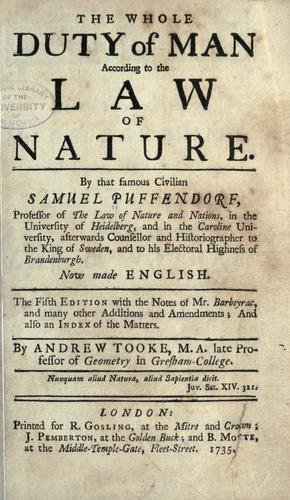
De officio hominis et civis
by Samuel Freiherr von Pufendorf
Ratist Community Rating
No reviews yet
Your Score Estimate
Rate a few books to unlock your estimate

Community breakdown
Bars show the community-aggregated score per category. Rate this book to contribute.
"In The Whole Duty of Man (1691), first published in Latin in 1673 as De officio hominis et civis, Pufendorf elaborates his conception of ethics, which separates civil duties from religious hopes. Unlike many Christian political theologians of the seventeenth century, Pufendorf refused to ground his natural law ethics in the ideal of human perfection or holiness; rather, he grounded them in the need for sociability, which he regarded as simply a means to an end - that is, human self-preservation and civil peace. Like Grotius and Hobbes, Pufendorf was responding to the religious wars that wracked early modern Europe by constructing a version of natural law capable of defending the civil state against the religious and moral delegitimation wielded by international Catholicism and Protestant zealots."--BOOK JACKET.